Last updated: 13 November 2026 | Written by Andy Bell, Partner, Lane Neave
Yes, in New Zealand you can be separated while you and your partner still share a house. Separation is a question of fact: it happens when at least one of you decides the relationship is over and you stop living together as a couple. No papers or court order are needed. Because you share an address, you will need clear evidence of the date and of how your lives changed.
The test comes from the Property (Relationships) Act 1976. A marriage ends when the spouses cease to live together as a married couple (section 2A(2)), civil unions are covered by section 2AB, and a de facto relationship ends when the partners cease to live together as a couple (section 2D(4)).
The date you separate starts several clocks. One is the two-year wait before either of you can apply for a divorce under section 39 of the Family Proceedings Act 1980. For property, a de facto partner must apply to the court within three years after the relationship ends (section 24(1)(c) of the 1976 Act), and a married or civil union partner within 12 months after the divorce order becomes final (section 24(1)(a)).
Record the date in writing at the time, for example in an email to your partner, and change how you live from that day. Where a couple stays under one roof, the Family Court looks for strong evidence that the relationship has ended, and a written record helps only if your conduct matches it.
Are there “separation papers” in New Zealand?
No document makes you separated. The Ministry of Justice says: “You and your ex-partner don’t have to do anything formal when you separate.” Your partner does not have to agree either. If one of you decides the relationship is over and acts on that decision, that is enough.
People searching for separation papers usually mean one of these:
- A letter or email recording that you have separated and the date. This costs nothing and is the most common record.
- A separation agreement, which records arrangements for property, money and children. The property terms will generally be enforceable only if they meet the formal requirements in section 21F of the Property (Relationships) Act 1976, including independent legal advice for each of you, and a lawyer witnessing each signature and certifying that they explained the effect and implications of the agreement first. The court can still set aside an agreement that would cause serious injustice.
- A separation order from the Family Court, which is rare and explained below.
Our separation overview covers how a binding agreement is put together.
What is a separation order, and do you need one?
A separation order is a Family Court order under Part 3 of the Family Proceedings Act 1980 (sections 20 to 26). It is available only to married couples and civil union partners, and either of you can apply. Under section 22, the court must make the order if it is satisfied that there is such disharmony between you that it would be unreasonable to require you to keep living together, or to resume living together. Your spouse or partner can defend the application.
While the order is in force, neither of you is obliged to live with the other (section 23), but you are still married or in a civil union. The order has two consequences that catch people out. If you have a will, section 19 of the Wills Act 2007 cancels any gift to your spouse or partner and any appointment of them as executor or trustee, unless the will shows you intended otherwise. If one of you dies without a will, section 26 treats the survivor as if they had died first, so they take nothing on the intestacy, although they can ask the High Court for provision from the estate.
The order stops having effect if you both freely agree to live together again as a couple (section 24). Under section 40, periods of living together totalling no more than three months do not count if reconciliation was the main reason. The court can also discharge the order if circumstances change (section 25), but not while a divorce application is pending.
You do not need a separation order to separate, to divide property, to sort out care of the children or to apply for a divorce later. The Community Law Manual describes them as “almost never made”. In my experience most people who ask about one are better served by a dated letter, a properly signed agreement once the terms are settled, and a new will.
How does the Family Court decide whether you separated while living together?
The court looks at how the household was run from day to day. In Zampino v Zampino [2020] NZFC 2789 (the names are pseudonyms), the Family Court described the test from earlier case law as a physical separation, and a mental attitude against continuing the relationship held by at least one of you. It also asked whether the couple had stopped operating as a single unit.
Living under one roof makes this harder to prove. In Zampino, the husband said the marriage ended in July 2015, when the couple began sleeping in separate bedrooms. The court said strong evidence is needed where spouses still share a home, and set the separation date at November 2018, when the wife and daughter moved out.
Until then the couple had kept their property together, attended school interviews and family events together, and presented to others as a couple.
Section 2D(2) of the Property (Relationships) Act 1976 lists factors for deciding whether two people live together as a couple in a de facto relationship. The court referred to them in Zampino, and they are a useful guide for marriages too. They include:
- whether you have a sexual relationship
- how your money is arranged, including joint accounts and who pays which bills
- how you divide household tasks such as cooking, cleaning and laundry
- your commitment to a shared life, such as holidays and family events together
- how family, friends and your community see your relationship
- how you care for and support any children
No single factor decides the question. Separate bedrooms on their own will rarely be enough, as Zampino shows. A clear statement of intention, followed by real changes to money, routines and social life, carries much more weight.
Why does the separation date matter so much?
The date fixes legal rights in several areas at once.
| What the date affects | The rule | Where it comes from |
|---|---|---|
| Divorce | You can apply once you have lived apart for two years | Family Proceedings Act 1980, s 39 |
| Married or civil union property claim | Apply within 12 months after the divorce order becomes final (the court can extend time) | Property (Relationships) Act 1976, s 24(1)(a) and s 24(2) |
| De facto property claim | Apply within three years after the relationship ends (the court can extend time) | Property (Relationships) Act 1976, s 24(1)(c) and s 24(2) |
| Short relationships | Under three years together is a relationship of short duration, with different property rules (a reconciliation of up to three months may be excluded) | Property (Relationships) Act 1976, s 2E |
| Property acquired later | Property either of you acquires while you are not living together as a couple is generally separate property | Property (Relationships) Act 1976, s 9 |
| Paying the mortgage after separation | If it considers it just, the court can compensate a partner for contributions made after separation, such as mortgage payments | Property (Relationships) Act 1976, s 18B |
| Benefits | Work and Income assesses whether you are in a relationship from the facts | Social Security Act 2018, s 8 |
| Working for Families and child support | Inland Revenue needs to know when your relationship status changed | Inland Revenue guidance |
A difference of a year or two in the date can shift a pay rise, a bonus or new KiwiSaver contributions from shared to separate property. Relationship property you held at separation stays shared, and is valued at the hearing date (section 2G).
The date can also decide whether a claim is out of time, or whether a relationship counts as short. After a short de facto relationship the court usually cannot divide property unless there is a child or one partner made a substantial contribution, and refusing would cause serious injustice (section 14A).
How does staying in the same house affect benefits, Working for Families and child support?
Work and Income decides your relationship status for itself, applying section 8 of the Social Security Act 2018, and its view of your separation date may differ from yours. In Ruka v Department of Social Welfare [1997] 1 NZLR 154, decided under the earlier 1964 Act, the Court of Appeal said a relationship in the nature of marriage needs both emotional commitment and financial interdependence. Sharing a house and some expenses does not by itself make two people a couple.
Expect to be asked for evidence, and tell Work and Income what changed and when.
If you receive Working for Families, your entitlement may change once you are no longer partners, so update your partner details with Inland Revenue.
Inland Revenue’s child support eligibility rules say a paying parent must not be living with the child, or must be sharing care of the child with someone else. While you both live in the same house with the children, check with Inland Revenue whether you can apply for a formula assessment. Many parents make a private arrangement until one of them moves out. Our article on how child support is worked out explains the formula.
How do you live separately under one roof in practice?
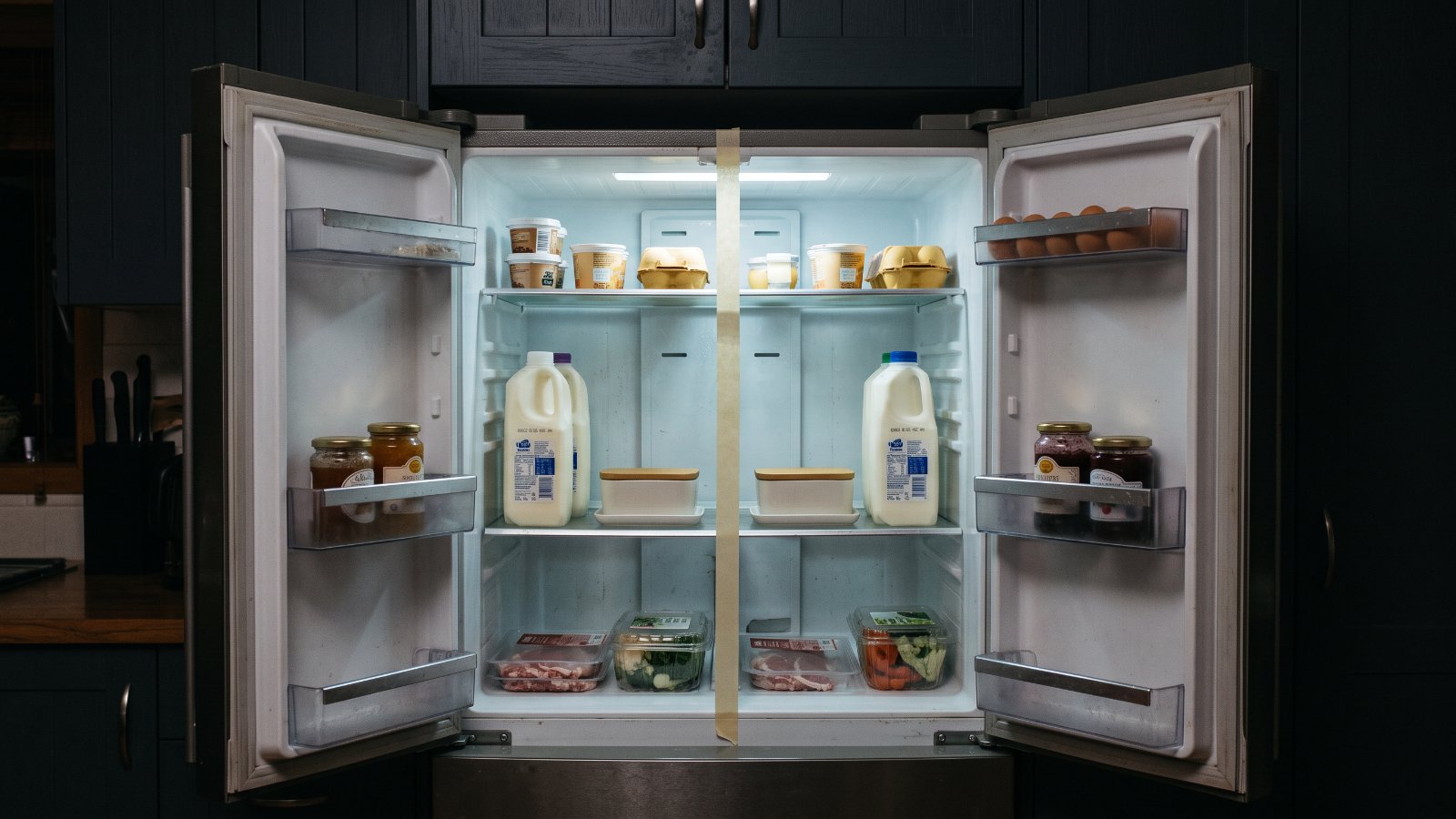
Most couples who do this stay for practical reasons, such as the children’s schooling, the cost of a second home or waiting for the house to sell. The arrangement works better when it is agreed and written down.
Points to agree include:
- who sleeps where and which rooms are shared
- how the mortgage, rent, power and groceries are paid, ideally from separate accounts for each person’s income
- routines for the children, including who does school pick-ups and who is home on which nights
- whether either of you can have guests or a new partner stay
- a rough plan for when one of you will move out, or when the house goes on the market
“The couples who manage this well treat it as a temporary arrangement with rules, and they write those rules down early. The ones who struggle often slip back into old routines, sharing meals, holidays and a joint account, and a year later they cannot agree when they separated. If you are staying put for the children or for money reasons, send a short email setting out the date and the ground rules, which costs nothing and can save a costly argument in court later.” Andy Bell, Partner, Lane Neave (Legal 500 Asia Pacific Recommended Lawyer)
If you do not feel safe, call the Police on 111 in an emergency. When you apply to the Family Court for a protection order under the Family Violence Act 2018, you can also ask for an order letting you stay in the home. An occupation order under section 27 of the Property (Relationships) Act 1976 can also give one partner the exclusive right to live there.
What has changed recently?
Since 17 October 2025, a person protected by a final protection order against their spouse or civil union partner can apply for a divorce without first living apart for two years, under section 39A of the Family Proceedings Act 1980. The usual requirements about arrangements for children still apply. A divorce also starts the 12-month time limit for a relationship property claim, so get advice on property before you apply.
The test for separation under one roof has not changed, despite what some searches suggest. The Law Commission’s 2019 proposals for a new relationship property regime have not been passed and are not law.
What should you do?
- Record the date you separated in a dated email or letter to your partner, and keep a copy. The record helps only if the way you live changes to match it.
- Change the practical arrangements that signal a couple: bedrooms, bank accounts, shared bills and joint social plans.
- Agree house rules in writing, including how costs are split and a target date for one of you to move out.
- Tell Work and Income and Inland Revenue about the change if you receive a benefit, Working for Families or child support.
- Get legal advice before you sign anything about property, and read our guide on what to do before approaching a separation lawyer.
Frequently asked questions
Does the two-year divorce period start if we still live in the same house?
It can. The two-year period under section 39 of the Family Proceedings Act 1980 runs from when you began living apart, and you can live apart under one roof. You will need to be able to prove the date, for example with a dated email, a separation agreement or a sworn statement.
Can my partner refuse to accept that we have separated?
No. Separation does not need both people to agree, and one person’s decision that the relationship is over, followed by a real change in how you live, is enough. If your partner later disputes the date, the Family Court will decide it on the evidence.
Does sleeping together again reset the separation date?
Not automatically. For divorce purposes, section 40 of the Family Proceedings Act 1980 says that living together again for periods totalling no more than three months, with reconciliation as the sole or main motive, does not break the two years, and the Community Law Manual notes that the law does not assume you are living together again just because you have sex. For property purposes the court looks at the whole picture of how you were living.
Is a trial separation a legal separation in New Zealand?
New Zealand law has no separate category called a trial separation. Whether time apart counts as separation depends on whether at least one of you has decided the relationship is over and you have stopped living as a couple, so a break you both see as temporary may not be a separation at all. Keep a record of what was decided and when, in case the date is disputed later.
Do I have to move out of the house to protect my share?
No. The family home is generally relationship property and is usually shared equally under the Property (Relationships) Act 1976, whoever stays in it, unless for example it is owned by a trust, a valid agreement says otherwise or the relationship was short. Moving out can affect practical matters, such as day-to-day care of the children and who pays the mortgage, so get legal advice before you go.
Separated but still under one roof? Talk it through with a family lawyer, including how to record your separation date. Free, no obligation, 30 minutes.
Related: separation in New Zealand: 5 legal points, how do I get a divorce in New Zealand?, and do I have to move out of the family home?
Andy Bell is a Partner at Lane Neave, a relationship property and employment lawyer in Wellington with over 20 years of experience. He is a Recommended Lawyer in the Legal 500 Asia Pacific and a Recommended Employment Lawyer in Doyle’s Guide 2026.
Last updated: 13 November 2026. This article is general information about New Zealand law, not legal advice on your situation.